The best Thai restaurants in Copenhagen range from an ambitious tasting menu to family-run neighbourhood cooking and quick takeaway. This updated list removes the duplicate addresses and non-Thai restaurant that appeared in the older Danish article.
Updated September 2026. The guide combines documented current information with practical editorial judgement. It is not a numbered personal taste ranking, and I have not personally revisited every address recently. Always confirm hours and menus through the linked source.
From fine dining to takeaway, Copenhagen has Thai food at several price levels.
Best Thai restaurants in Copenhagen at a glance
Best for
Try
Price
Thai fine dining
Kiin Kiin
Special occasion
An intimate dinner in Nyhavn
Khun Juk Oriental
Mid-range / special occasion
Family-run cooking
Kin Arai Thai Corner
Mid-range
Isarn flavours
Baan Thai Isarn
Budget / mid-range
Takeaway
Aroii or Thai Me Up
Budget / mid-range
Several central locations
Wokshop
Budget / mid-range
Order contrasting dishes for the table instead of several similar curries.
What “authentic” means here
Authenticity is not a single recipe frozen in time. In this guide it means a restaurant is transparent about its Thai foundation, cooks recognisable Thai dishes and treats the cuisine as more than a generic “Asian” label. The Royal Thai Government’s Thai Select programme is one useful signal, but it is not the only reason to visit a place.
15 Thai places to try
1. Kiin Kiin
Refined Thai tasting menus on Nørrebro. The restaurant states that it held a Michelin star from 2008–2023; today it remains the city’s clearest Thai fine-dining choice. Address: Guldbergsgade 21, 2200 Copenhagen N. Price: Special occasion. Website or current listing · Map.
2. Khun Juk Oriental
An intimate restaurant in the quiet end of Nyhavn. It has received the Thai Select Premium distinction from the Royal Thai Government. Address: Nyhavn 63D, 1051 Copenhagen K. Price: Mid-range to special occasion. Website or current listing · Map.
3. Kin Arai Thai Corner
A family-run Vesterbro restaurant cooking from scratch across three generations. Address: Gasværksvej 23, 1656 Copenhagen V. Price: Mid-range. Website or current listing · Map.
4. Baan Thai Isarn
A long-running Vesterbro favourite for northeastern Thai flavours and a casual meal. Address: Lille Istedgade 7, 1706 Copenhagen V. Price: Budget to mid-range. Website or current listing · Map.
5. Baan Thai Isarn 2
A second Vesterbro address with a broad Thai menu and all-day opening on most days. Address: Halmtorvet 44, 1700 Copenhagen V. Price: Budget to mid-range. Website or current listing · Map.
6. Ban Gaw
A useful choice near the Meatpacking District for curries, soups and classic Thai sharing dishes. Address: Halmtorvet area, Copenhagen V. Price: Budget to mid-range. Website or current listing · Map.
7. Ranee’s
An established Nørrebro restaurant often mentioned for organic ingredients and a relaxed neighbourhood atmosphere. Address: Blågårds Plads area, Copenhagen N. Price: Mid-range. Website or current listing · Map.
8. Poon Chai
A central, casual restaurant recognised with a Thai Select award. Address: Istedgade, Copenhagen V. Price: Budget to mid-range. Website or current listing · Map.
9. Satang Thai Bistro
A small bistro-style option for classic dishes and a less formal evening. Address: Copenhagen. Price: Budget to mid-range. Website or current listing · Map.
10. Aroii
Kiin Kiin’s takeaway-focused sister concept, practical for curries and noodles at home. Address: Guldbergsgade 23, 2200 Copenhagen N. Price: Budget to mid-range. Website or current listing · Map.
11. Aroiidee
A Thai bistro from the Kiin Kiin family, serving dinner year-round. Address: Guldbergsgade 21, 2200 Copenhagen N. Price: Mid-range. Website or current listing · Map.
12. Green Mango Nørrebro
A modern, easy-going Thai restaurant with familiar curries, noodles and salads. Address: Nørrebro, Copenhagen. Price: Budget to mid-range. Website or current listing · Map.
13. Thai Me Up
A takeaway-oriented local option with an extensive menu and clear online ordering. Address: Rantzausgade 8A, 2200 Copenhagen N. Price: Budget. Website or current listing · Map.
14. Wokshop
A convenient multi-location choice for a quick Thai-inspired meal in central Copenhagen. Address: Several Copenhagen locations. Price: Budget to mid-range. Website or current listing · Map.
15. Thai Senses
A neighbourhood option worth checking when you want classic Thai dishes outside the city-centre fine-dining format. Address: Copenhagen. Price: Budget to mid-range. Website or current listing · Map.
Spice levels and cooking styles vary, so ask the restaurant rather than assuming.
How to order a better Thai meal
Mix a soup or salad, a stir-fry and a curry instead of ordering three similar coconut curries.
Ask how the kitchen interprets spice levels; “medium” is not universal.
Tell the restaurant clearly about allergies, especially peanuts, shellfish, fish sauce and oyster sauce.
For vegetarian or vegan food, ask whether sauces and curry pastes contain fish or shrimp ingredients.
Order sticky rice when the regional dish calls for it rather than assuming jasmine rice fits everything.
A note on prices and opening hours
The price categories are deliberately broad because lunch offers, takeaway prices and tasting menus change. I checked that each concept had a current web or map presence while preparing this draft, but restaurants can change hours quickly. Follow the link and reserve directly before making a special journey.
Frequently asked questions
What is the most special Thai restaurant in Copenhagen?
Kiin Kiin is the clearest fine-dining choice. Its own site states that it held a Michelin star from 2008 to 2023.
Where can I find Thai food near Copenhagen Central Station?
Vesterbro has several choices, including Kin Arai, Baan Thai Isarn, Baan Thai Isarn 2 and Poon Chai. Check the map link for the branch closest to you.
Is Thai food in Copenhagen good for vegetarians?
Many restaurants offer vegetarian dishes, but curry pastes and sauces may contain fish sauce, oyster sauce or shrimp paste. Ask specifically if you need a fully vegan meal.
Use this list of the best Thai restaurants in Copenhagen as a starting point, then confirm the latest menu and opening hours before you go.
Looking for the best restaurants in Copenhagen? This guide gives you 25 genuinely useful choices across budgets and styles: Danish lunch, modern Nordic cooking, seafood, pizza, Mexican food, ramen, burgers and destination tasting menus.
Updated September 2026. This is a curated local guide, not a claim that I have personally revisited every restaurant this month. Where I include a personal view, I say so. Menus, opening days and prices change; the official link beside every place is the final source.
Twenty-five useful Copenhagen choices across styles and budgets.
Quick picks
Best for
Choose
Price signal
Traditional smørrebrød
Schønnemann or Aamanns 1921
Mid-range / special occasion
Modern Nordic without the longest tasting menu
Høst or Vækst
Mid-range
Seafood
Kødbyens Fiskebar
Mid-range / special occasion
A once-in-a-lifetime meal
Geranium, Alchemist, Kadeau or Koan
Luxury
Casual group meal
Reffen or Torvehallerne
Budget / mid-range
Pizza
Bæst
Mid-range
Fast, informal meal
Gasoline Grill, La Neta or Slurp
Budget / mid-range
How the guide is organised
The “price signal” compares these places with one another, not with every city in Europe. Budget means a relatively affordable Copenhagen meal; mid-range usually means table service; special occasion means you should read the current menu before booking; and luxury means a destination experience with a substantial price and time commitment.
Pair restaurants by neighbourhood to avoid crossing the city between every meal.
25 restaurants and food destinations to know
1. Aamanns 1921
Modern Danish smørrebrød in a polished central setting. A particularly useful first stop if you want a classic Copenhagen lunch presented with contemporary precision. Price: Mid-range to special occasion. Official website · Map.
2. Restaurant Schønnemann
A historic lunch restaurant for traditional smørrebrød, schnapps and old-school Copenhagen atmosphere. Reserve well ahead. Price: Mid-range to special occasion. Official website · Map.
3. Selma
Creative seasonal smørrebrød with a modern point of view and an excellent drinks list. Price: Mid-range. Official website · Map.
4. Barr
North Sea-inspired cooking in a landmark harbour location. Good for guests who want serious food without a stiff dining room. Price: Special occasion. Official website · Map.
5. Høst
A warm, design-led introduction to modern Nordic cooking with set-menu options. Price: Mid-range to special occasion. Official website · Map.
6. Vækst
Nordic produce and a greenhouse-like interior in the Latin Quarter. Price: Mid-range. Official website · Map.
7. Restaurant Cofoco
An approachable neighbourhood restaurant and a dependable entry point to the Cofoco group. Price: Mid-range. Official website · Map.
8. Delphine
A large Mediterranean dining room near Vesterbro, useful for groups and lively dinners. Price: Mid-range. Official website · Map.
9. Kødbyens Fiskebar
Fish, shellfish and wine in the Meatpacking District. The room is informal; the cooking is much more exact than the concrete surroundings suggest. Price: Mid-range to special occasion. Official website · Map.
10. Restaurant Kanalen
Seasonal cooking beside the water in Christianshavn. The location is part of the experience. Price: Special occasion. Official website · Map.
11. noma
One of the defining restaurants of New Nordic cuisine. Its format and opening periods change, so check the official site before planning a trip around it. Price: Luxury. Official website · Map.
12. Geranium
Highly choreographed fine dining with a view over Fælledparken. This is a full-evening, book-far-ahead experience. Price: Luxury. Official website · Map.
13. Alchemist
Immersive, theatrical fine dining rather than a conventional restaurant visit. Availability is limited and the commitment is substantial. Price: Luxury. Official website · Map.
14. Kadeau Copenhagen
Bornholm ingredients and preservation traditions interpreted as an ambitious tasting menu. Price: Luxury. Official website · Map.
15. Koan
A tasting-menu restaurant drawing on Korean and Nordic ideas. Book early and confirm the current menu directly. Price: Luxury. Official website · Map.
16. Alouette
Creative contemporary cooking in an intimate setting, suited to a special dinner. Price: Luxury. Official website · Map.
17. Bæst
Sourdough pizza, house-made charcuterie and cheese in a bustling Nørrebro room. Price: Mid-range. Official website · Map.
18. Sanchez
Bold Mexican flavours and a lively Vesterbro atmosphere. Price: Mid-range. Official website · Map.
19. La Neta
Casual tacos and a good choice when you want flavour without a long formal meal. Price: Budget to mid-range. Official website · Map.
20. Jah Izakaya & Sake Bar
Small Japanese-style plates, sake and an energetic Vesterbro setting. Price: Mid-range. Official website · Map.
21. Slurp Ramen Joint
Focused bowls of ramen in an informal room; queues can happen at peak times. Price: Budget to mid-range. Official website · Map.
22. Gasoline Grill
A compact Copenhagen burger institution with several locations. Price: Budget to mid-range. Official website · Map.
23. POPL
Burgers and seasonal sides from a team with roots in Copenhagen fine dining. Price: Mid-range. Official website · Map.
24. Reffen
A large seasonal street-food market where a group can choose different cuisines and still eat together. Price: Budget to mid-range. Official website · Map.
25. Torvehallerne
Two central market halls for coffee, produce, quick lunches and edible souvenirs. Price: Budget to mid-range. Official website · Map.
For popular dining rooms, book directly and confirm the cancellation policy.
How to choose the right Copenhagen restaurant
For a first Danish lunch, prioritise smørrebrød rather than forcing it into an already full dinner schedule.
For tasting menus, check the duration, prepayment and dietary-policy details before booking.
For groups, choose larger rooms such as Delphine, Reffen or Torvehallerne.
For a spontaneous meal, search within one neighbourhood and keep two backups.
For allergies, contact the restaurant directly; never rely on a third-party menu screenshot.
Booking and tipping
Reserve popular tables through the restaurant’s own booking link. Some tasting-menu restaurants require prepayment and apply strict cancellation rules. Service is included in Danish prices; tipping is optional, not obligatory. A small tip is welcome when service has been especially good.
Frequently asked questions
Which Copenhagen restaurant should a first-time visitor choose?
For Danish food, Aamanns 1921 or Schønnemann are clear introductions. For an informal modern dinner, Høst, Vækst or Kødbyens Fiskebar are useful starting points.
Can I eat well in Copenhagen on a budget?
Yes. Use bakeries, tacos, ramen, burgers and food markets for some meals, then spend more on the one dinner that matters most.
Are the Michelin restaurants easy to book?
Usually not. Availability, prepayment and opening periods vary, so use the official sites and plan well ahead.
Short answer: start with the harbour, the historic centre and one neighbourhood beyond the postcards. Copenhagen is compact enough to explore on foot, but the metro, harbour buses and a sensible bike route make it easy to cover more without rushing.
Last checked: September 2026. Opening hours, tour schedules and ticket prices can change, so use the official links before you go.
Copenhagen is compact, walkable and best enjoyed at a relaxed pace.
The best Copenhagen experiences at a glance
If you want…
Choose this
Allow
A first overview
Classic canal tour + walk from Nyhavn to the historic centre
3–4 hours
Local neighbourhoods
Nørrebro, Vesterbro or Christianshavn on foot
Half a day
Food
Torvehallerne, Reffen and one booked dinner
Half to full day
A rainy-day plan
Glyptoteket, SMK, National Museum or DAC
2–5 hours
A free day
Harbour Circle, parks and Amager Strandpark
Half to full day
1. See Copenhagen from the water
A canal tour is not just a tourist shortcut. It gives you the clearest explanation of why Copenhagen looks and moves the way it does: old trading streets, low bridges, naval history, new architecture and people swimming in the harbour all meet within a small area.
For a first visit, choose a classic guided canal cruise. For more freedom, rent an electric boat only if someone in your group is comfortable steering and everyone understands the local rules. Kayak and harbour tours are better for active travellers.
Copenhagen is at its best when harbour life, cycling and walking share the same day.
2. Take a guided walk — or build your own
A good guide adds the stories that façades cannot tell you. Choose a classic city walk for royal Copenhagen and the medieval streets, a food tour if your schedule is short, or a neighbourhood tour if you have already seen Nyhavn.
The official guided walking-tour guide includes licensed guides, themed walks and private options. If you prefer to walk alone, this simple route works well:
Start at Kongens Nytorv and walk through Nyhavn.
Continue beside the harbour to Amalienborg and the Marble Church.
Cross toward Rosenborg Castle and the Botanical Garden.
Finish at Torvehallerne for lunch or coffee.
3. Explore Copenhagen by bike — carefully
Cycling is the fastest way to feel like a local, but Copenhagen bike lanes are real traffic lanes, not sightseeing pavements. Keep right, signal before stopping or turning, and never pause in the lane for a photo. A guided bike tour is the safest introduction if you are unfamiliar with city cycling.
A relaxed route can combine the Lakes, Superkilen, Assistens Cemetery and Frederiksberg. A harbour route can connect Islands Brygge, Christianshavn, Refshaleøen and Nordhavn.
4. Eat your way through the city
Copenhagen food is much broader than tasting menus. Try smørrebrød for lunch, a proper bakery in the morning, seasonal Nordic cooking for dinner and street food when a group cannot agree on one cuisine.
Torvehallerne is central and open year-round; Reffen is larger, more seasonal and better when the weather invites you to stay outside. Check the venues’ own websites before travelling across town.
5. Go beyond Nyhavn
Christianshavn and Refshaleøen
Walk beside the canals, climb the tower of the Church of Our Saviour if heights agree with you, and continue toward contemporary architecture and street food on Refshaleøen.
Nørrebro
Combine Jægersborggade, Assistens Cemetery, Superkilen and the streets around Sankt Hans Torv. This is a better area for everyday city life than for ticking off monuments.
Vesterbro and the Meatpacking District
Come for cafés, independent shops, restaurants and nightlife. The area changes character quickly from daytime to evening, so it can work twice in the same itinerary.
Amager and the beach
Amager Strandpark is an easy metro trip when you need open sky, a swim or a break from museums. The harbour baths are closer to the centre, but follow posted safety information and swim only in designated areas.
6. The classic sights that are worth your time
Tivoli Gardens: part amusement park, part garden and especially atmospheric after dark.
Rosenborg Castle: compact royal history and the Crown Jewels beside the King’s Garden.
Amalienborg: the royal square, museum and changing of the guard.
The Round Tower: a central viewpoint reached by its famous spiral ramp.
The National Museum: the broadest introduction to Danish history.
SMK: Denmark’s national gallery, useful for both Danish and European art.
Glyptoteket: sculpture, ancient cultures and one of the city’s loveliest indoor spaces.
Danish Architecture Center: the clearest entry point to Copenhagen’s architecture and urban design.
Use the official attractions overview for current opening information, and compare the Copenhagen Card only after listing the paid attractions you will realistically visit.
7. What to do when it rains
Do not spend the whole day moving between tiny indoor stops. Choose one large museum, add a long lunch and keep one covered market or design shop as your flexible extra. Glyptoteket, SMK, the National Museum and DAC can each carry several hours.
Rain does not have to cancel a Copenhagen day: combine museums, cafés and shorter neighbourhood walks.
A realistic three-day Copenhagen plan
Day
Morning
Afternoon
Evening
1
Historic centre and Rosenborg
Nyhavn + canal tour
Dinner in Vesterbro
2
Nørrebro walk and bakery
Frederiksberg or museums
Nordic or Thai dinner
3
Christianshavn
Refshaleøen or Amager beach
Harbour sunset and casual food
Local tips that save time and money
Base each half-day in one area instead of crossing the city repeatedly.
Use contactless payment, but keep a physical card as backup.
Check whether a restaurant requires a reservation before building your day around it.
Do not assume a bike is faster if you are nervous in traffic.
Verify seasonal opening hours for Tivoli, Reffen and outdoor attractions.
Yes. The historic centre is compact, and many first-time sights can be linked on foot. Use the metro or harbour bus between neighbourhoods.
Do I need a Copenhagen Card?
It can be good value if you visit several paid attractions and use public transport. Add up your actual plan before buying rather than assuming it always saves money.
How many days should I spend in Copenhagen?
Three days gives a strong first visit. Four or five days lets you slow down, explore neighbourhoods and take a day trip.
What should I book in advance?
Book sought-after restaurants, special exhibitions, guided tours and popular attractions with timed entry. Ordinary public transport does not need advance booking.
The best Copenhagen day is rarely the one with the most pins on a map. Leave enough room for a bakery, a bench by the water and one unplanned street.
Normally, 80–100 per cent of my diet consists of grass-fed beef. This is often called a carnivore diet — or, more simply, a meat-based diet.
In my personal experience, that diet and the rest of my lifestyle have helped save my health. Only about two years ago, I could not eat bread, dairy products or many other foods. Today I can occasionally eat something I previously had to avoid entirely.
And when I do, I want to do it properly. So I am throwing myself enthusiastically into this project about pastries and ‘everything I normally should not eat’: the search for the best cardamom bun.
When the experiment is over, I return to my normal eating habits. This is my personal experience, not a promise that the same diet will work the same way for others. Read more about my diet and health journey at MarkBarner.com.
I actually expected one of Copenhagen’s most famous bakeries to win this taste test. It did not.
After travelling between bakeries in Amager, Østerbro, Vesterbro, Islands Brygge, Nordhavn, Herlev, Gilleleje and elsewhere in North Zealand, one cardamom bun still stands clearly above the rest. The winner comes from a small bakery on Amager.
Along the way, I also found a surprisingly good cardamom bun at a large coffee chain, some of the best prices at traditional neighbourhood bakeries, and a recurring problem that began to annoy me more than dry dough:
‘Sorry, we have sold out of cardamom buns.’
I visited some places several times. At a few, I made three unsuccessful trips. I tasted products again and moved them in the rankings. I had warm buns, almost freshly baked buns, dry buns, slightly burnt buns, buns without noticeable remonce, orange-flavoured buns and buns with cardamom seeds so large that the spice practically exploded between my teeth.
This is therefore not a collection of random recommendations from social media. It is my personal, ongoing taste test, based on my own visits, purchases and experiences.
I will reveal the winner straight away. What interests me is why it won, why Juno is still worth queueing for, why Espresso House surprised me, and why some otherwise respected bakeries never made the rankings.
The Quick Answer
If you do not have time to read the whole article, here is my current conclusion:
What Are You Looking For?
My Choice
Best overall
Den Bette on Amager
Gooeyest and most intensely flavoured
Nordisk Brød
Best for strong cardamom, creamy filling and crisp edges
Nordisk Brød
Best mix of classic Danish bakery style, price and indulgence
Nordisk Brød
Best for a controlled balance of substantial dough, moist centre and cardamom
Den Bette
Best for a warm, freshly baked, aromatic cardamom bun
Juno
Best in North Zealand
Det Høje Brød in Gilleleje
Biggest pleasant surprise from a chain
Espresso House
Most substantial at a good price
Bodenhoff, although the flavour ranks in the middle group
Best trendy café experiences
Alice and RUG
Best for milder cardamom and marzipan cream
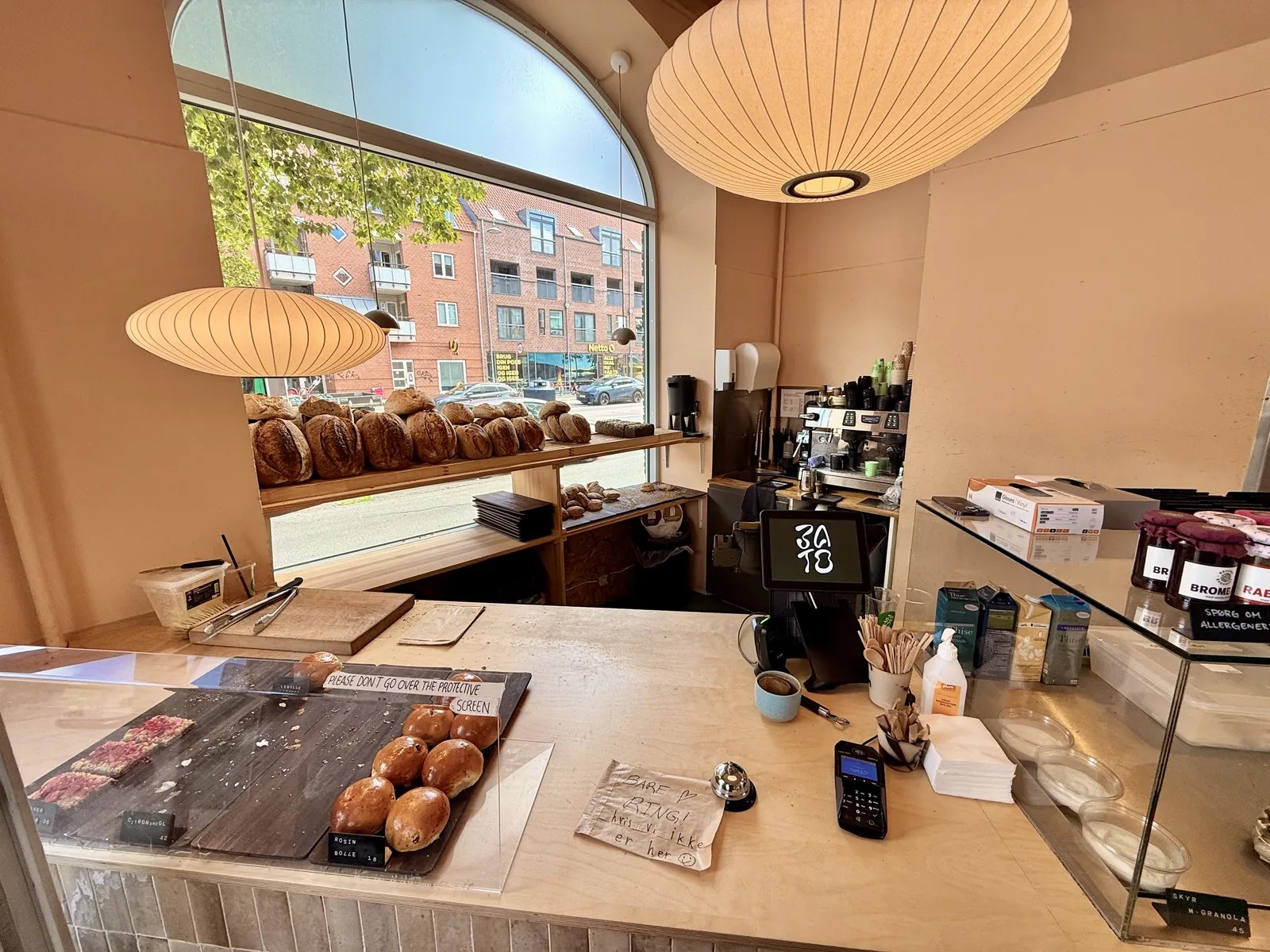
Jato Bakery
A pleasant snack by the water
Kajakhotellet, but not for the coffee
Biggest disappointment among those I tasted
Conditori La Glace
Best for a rich, braided bun with milder cardamom
Sinne Gas Bageri
Not ranked because they were sold out when I visited
Andersen & Maillard and Lille Bakery
Best-tasting in the bottom group
Lidl, but still not a recommendation
My clear number one is Den Bette.
Juno follows in second place. Det Høje Brød and Nordisk Brød share third.
Espresso House, Alice, Meyers and Jato share fourth. RUG follows in fifth.
Sinne Gas, Andersen Bakery and Bodenhoff share sixth.
My Complete Ranking
Rank
Bakery or Retailer
1
Den Bette
2
Juno the Bakery
3
Det Høje Brød and Nordisk Brød
4
Espresso House, Alice, Meyers Bageri and Jato Bakery
5
RUG Bakery
6
Sinne Gas, Andersen Bakery and Bodenhoff
7
Bagerdygtigt
8
Svaneke Brød 2300
9
Hart Bageri and Kajakhotellet
10
Kasada
11
Conditori La Glace
12
Lidl
13
SuperBrugsen Bager, Gilleleje
14
Kvickly, Føtex and Lagkagehuset
Conditori La Glace is number 11. After that comes the bottom group of inexpensive industrial buns, included to make the test complete, not as recommendations.
How I Tested the Cardamom Buns
I did not taste all the buns blind or on the same day. That would hardly be possible. If you try to cover all of Copenhagen in one day, several bakeries will sell out before you arrive. After five or six sweet pastries, your sense of taste also gradually gives way to nausea.
The products were therefore tasted on different days and at different times. That is a limitation, but also a realistic part of the experience. An ordinary customer does not know in advance whether a bun will be warm, have been sitting for three hours or come from a batch baked a little too dark.
I particularly assess:
The strength and aroma of the cardamom.
Use of whole and coarsely crushed cardamom seeds.
Dough texture.
Moisture, remonce filling and any vanilla or butter flavour.
Sweetness and the balance between sugar and spice.
Size and how filling it is.
Price and value.
Freshness.
Availability and the risk of a wasted trip.
Ingredients, where publicly documented.
Whether the place is really worth travelling for.
Prices are those I paid or remember from my visits. They are not guaranteed current prices. Opening hours, prices and ranges change, so use the Google Maps links and always check before travelling far.
What Do I Look For in a Cardamom Bun?
I love sweetness, but I do not want a product that tastes only of pure sugar.
The cardamom should be clear, warm, aromatic and full-bodied. I want a middle note of butter and remonce, perhaps with a mild hint of vanilla or cream. Remonce is the classic filling of fat and sugar, often with brown sugar, marzipan, cinnamon or cardamom depending on the product.
My ideal cardamom bun has:
A substantial, fairly firm dough.
A little crispness outside.
A moist, preferably slightly gooey centre.
A distinct butter and remonce flavour.
Strong cardamom.
Whole or coarsely crushed cardamom seeds.
A size that feels reasonable for the price.
So I prefer something closer to a classic cinnamon swirl, an enriched yeast dough or a Danish pastry than an airy tea bun.
Why Size and Substance Matter to Me
I am almost two metres tall and weigh around 90 kilos. When I fancy a little something with coffee, a small, airy tea bun often feels insufficient. It may look large, but moments later it almost feels as though I have eaten nothing.
Den Bette’s cardamom bun gives me an entirely different sense of satisfaction.
It almost approaches the fullness of a BMO — a bread roll with cheese — although the two are obviously not nutritionally comparable. A cardamom bun is sweet baking, while a cheese roll has a different balance of protein, fat and carbohydrate.
The point is the size, weight and feeling of having had a proper piece of baking with coffee.
Three Distinct Styles of Cardamom Bun
This is my own practical grouping after tasting, not an official baking classification. Some products overlap, but the categories explain why two good cardamom buns can be entirely different.
1. The Classic Gooey Bakery Swirl
This is the freely shaped, irregular swirl that reminds me of traditional Danish bakery goods. It is not necessarily symmetrical or Instagram-friendly. It is allowed to settle naturally, while the filling runs out and caramelises at the edges.
This style has plenty of filling, pronounced sweetness, crisp caramelised edges, soft bread inside and a more intense flavour experience. It also leaves your fingers sticky. Nordisk Brød is the clearest example in the test.
2. The Substantial, Balanced Twisted Bun
This type has more structure, weight and shape, but remains moist inside. It is less extravagantly gooey than Nordisk Brød, yet feels more satisfying than the modern airy cardamom bun.
Den Bette is the best example. It combines robust dough, a little crispness, a moist centre, large cardamom seeds and a more controlled balance of dough and filling. Bodenhoff and a few other mould-baked versions move in this direction too, but without the same strong cardamom flavour.
3. The Modern Nordic Cardamom Bun
This type is often more aesthetic, symmetrical and bread-like. It can be soft and brioche-like, as at Juno; drier and sturdier, as at Meyers; light and café-friendly, as at Alice and RUG; or contain a softer marzipan cream, as at Jato. Here the dough is often a bigger part of the experience than in the classic gooey bakery swirl.
Juno stands out positively in this group thanks to warm serving, large cardamom seeds, butteriness and strong cardamom. Meyers, Alice and RUG lean towards the drier or more bread-focused end. Jato lacks Juno’s large seeds, but its marzipan cream adds pleasant sweetness and moisture.
The leading group therefore includes several styles. Den Bette wins on balance, substance and a moist centre. Juno wins on freshness, warmth and distinct cardamom seeds. Det Høje Brød is my preferred North Zealand option. Nordisk Brød wins on maximum cardamom, sweetness, creaminess, gooeyness and classic bakery character.
I generally prefer flavour and filling to pure aesthetics. That does not mean gooey is the only valid style. It simply means a perfectly twisted exterior cannot stand alone.
Why Whole and Coarsely Crushed Cardamom Seeds Matter
Ready-ground cardamom gives an even flavour. Large or coarsely crushed cardamom seeds do something different.
When a seed breaks between your teeth, it releases an intense, concentrated aroma.
Juno does this brilliantly. Den Bette does it very well too, and Nordisk Brød reached the same high level with cardamom throughout the pastry and large aromatic seeds.
Use the seeds inside the green cardamom pods. The green husks are tough and unpleasant to chew. Open and discard them, then use the seeds finely crushed, coarsely crushed and, in smaller quantities, whole.
Cardamom Buns Worth Travelling For
1. Den Bette, Amager
Ranking: My clear number one Dough style: Substantial, firm and slightly Danish-pastry-like Price on my visit: Around DKK 40 Best for: The overall cardamom experience
Den Bette is a small bakery and coffee spot on Kirkegårdsvej, Amager, with a more local atmosphere than the most touristy places in the centre.
Den Bette still makes the best cardamom bun I have found.
It has the substance I miss elsewhere. The dough is firm and compact, closer to a classic cinnamon swirl, croissant dough or Danish pastry than an airy cardamom roll.
The surface is slightly crisp without becoming hard. Inside it remains moist and a little gooey. The cardamom is distinct, and the combination of finer spice and larger seeds works brilliantly. The large pieces provide the sudden aromatic bursts I am looking for.
It is also the most satisfying bun with coffee.
At first glance, around DKK 40 seems expensive. It is a high price for one pastry. Several other places, however, charge around DKK 35–40 for products that feel considerably smaller and lighter.
In that sense, Den Bette still offers some of the best value. I would not want them to shrink the bun to lower the price. Its size and weight are essential to the experience.
There are few indoor seats. More seating is available outside, but on a rainy day it is less suitable for a long café visit.
My verdict: The clear winner. The best combination of cardamom, large seeds, weight, crispness, moisture, size and satisfaction.
2. Juno the Bakery, Østerbro
Ranking: Number 2 Dough style: Soft, airy and brioche-like Greatest strength: Freshness, full cardamom flavour and large seeds Greatest weakness: The dough is too soft for my taste
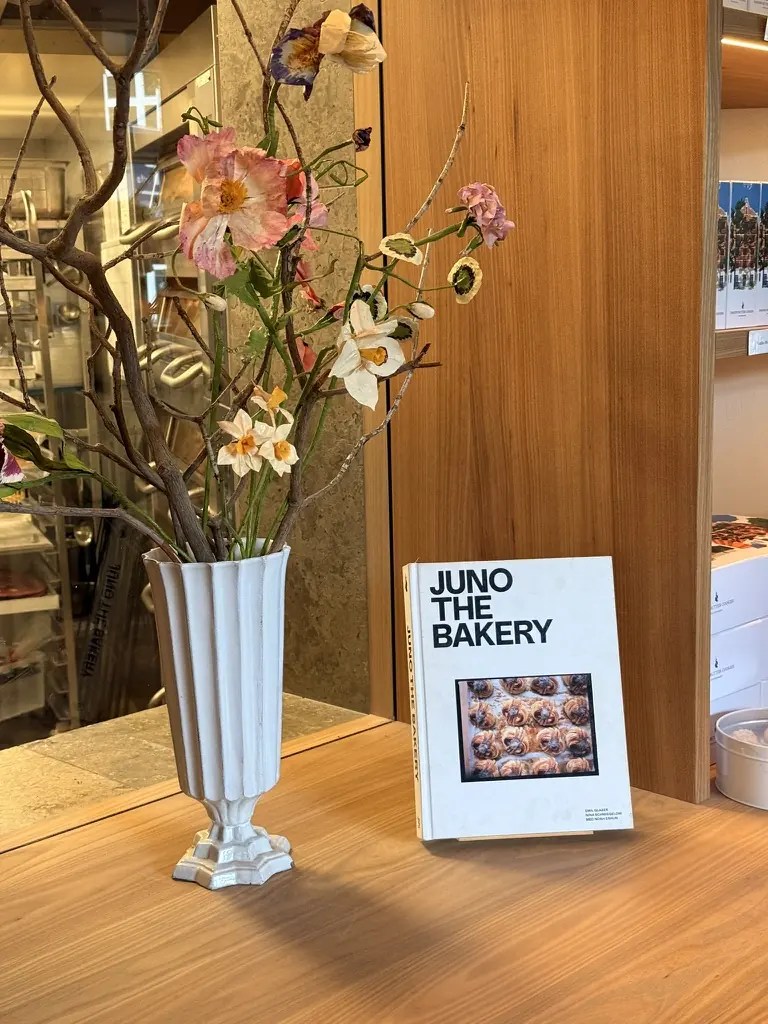
Juno is on Århusgade and has become one of Copenhagen’s best-known bakeries. Its cardamom bun is a key signature product.
I understand its popularity.
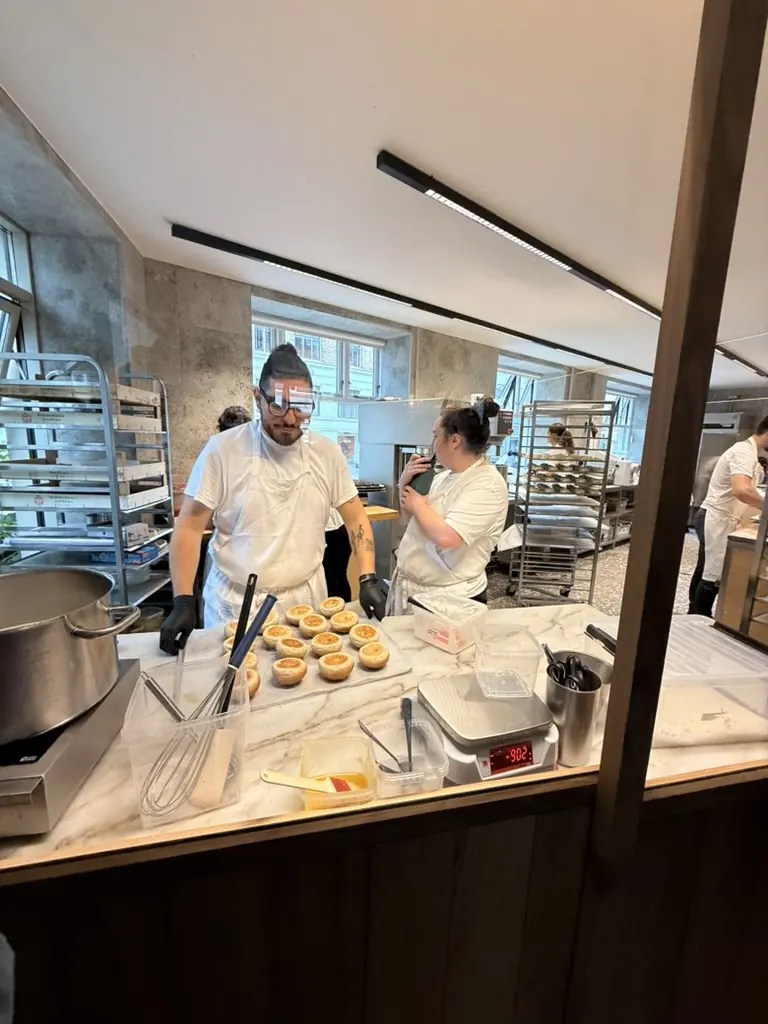
The production is excellent. You can look into the bakery and watch the bakers work. I have visited in the morning, late morning and afternoon. Every time, production was underway and fresh trays were coming out.
That means you often receive a bun that is still warm and freshly baked.
The cardamom flavour is full and strong. Juno uses large, distinct seeds that crunch between your teeth and give a much more intense aroma.
There is also a light butteriness that works well with the cardamom and mild wheat dough. I notice a sweet, creamy note in the aftertaste, reminiscent of remonce, vanilla custard or a spandauer Danish pastry.
I do not have Juno’s full recipe, so I cannot establish which specific ingredient creates that note. This is my description of the flavour experience.
The dough keeps Juno from first place. It is very soft, airy and almost brioche-like. To me, it feels more like a luxurious tea bun than a substantial twisted cardamom bun.
If you love soft Swedish cardamom buns, Juno could easily be your favourite. I prefer more structure and weight.
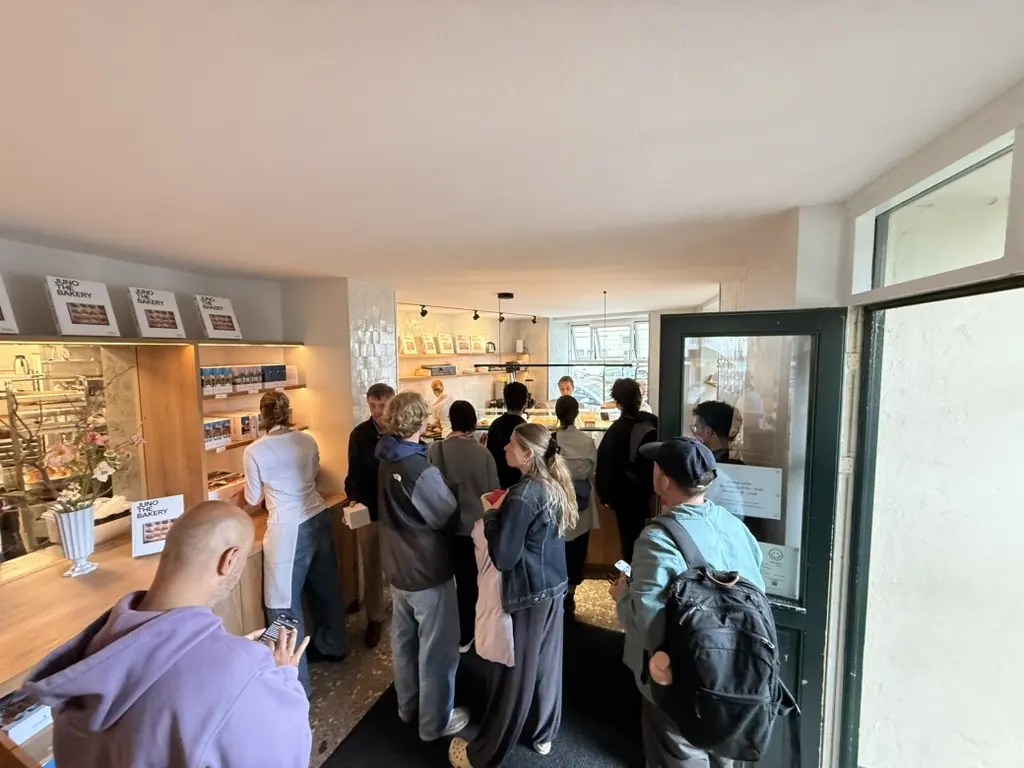
Juno is also very touristy and often overcrowded. There is frequently a queue, and it has lost some of the quiet neighbourhood-bakery feeling.
Its popularity is not empty hype, though. Continuous production, warm serving and strong cardamom make Juno worth visiting. It also has an official pre-ordering page worth using on busy days: Juno reservations.
My verdict: Worth travelling for its freshness, buttery note, full cardamom flavour and large seeds. The dough is simply too soft to beat Den Bette.
3. Det Høje Brød, Gilleleje
Ranking: Joint number 3 and my choice in North Zealand Dough style: Softer and more bread-roll-like Greatest strength: Freshness, flavour and evident craftsmanship Biggest challenge: Limited production and the risk of selling out
Det Høje Brød is a small microbakery beside Gilleleje Station. It opens on limited days and often sells out. Always check its daily posts before leaving.
When I am in North Zealand, this is the place I would travel for.
Its cardamom bun belongs more to the soft, classic tea-bun category than Den Bette’s. Normally that would lower my rating noticeably, but the flavour is good enough to keep it among my favourites.
The cardamom is distinct and concentrated. I do not remember the same large seeds as at Den Bette, Juno and Nordisk Brød, so you do not quite get the same sudden aromatic explosion.
On the other hand, the buns are often incredibly fresh.
In the morning, they can be so freshly baked and soft that I almost prefer leaving them for a while. As they cool a little, the dough sets and the texture improves.
Det Høje Brød also makes excellent sourdough loaves and rolls. Availability is the problem. I have visited several times in the early afternoon to find popular products sold out.
Here the explanation is easier to accept than at some larger places. It is a small bakery, and one skilled baker can only produce so much.
The advice is still clear: arrive early or have something put aside.
My verdict: The best place I have found in North Zealand so far. Good cardamom flavour, exceptional freshness and evident craftsmanship.
3. Nordisk Brød on Amager: An Explosion of Cardamom and Creamy Filling
Area: Holmbladsgade, Amager Ranking: Joint number 3 Dough style: Classic, sturdy, freely shaped swirl dough Price on my visit: I remember roughly two for DKK 36 Greatest strength: Strong cardamom, large seeds, creamy filling, gooeyness and price Greatest weakness: Noticeably sweeter than most others tested, and not the most beautiful
The price shown was current at the time of my visit and may have changed.Nordisk Brød’s cardamom bun wins on large seeds, crisp edges and a very gooey centre rather than symmetry.
I revisited Nordisk Brød, and my latest visit made it even clearer how different its cardamom bun is from almost all the modern café versions.
It is not elegant or perfectly shaped. It does not look twisted and placed in a mould to be photographed from every angle. It is rustic, uneven and looks as though it has been allowed to rise, spread and settle naturally.
To me it recalls the classic Danish neighbourhood bakery tradition, where flavour, filling and satisfaction matter more than perfect symmetry. That is a personal comparison, not a statement about its recipe or production method.
And it tastes extraordinarily good.
The first impression is an explosion of cardamom and something creamy that I can best describe as custard-like.
I do not know whether the filling is technically custard, cardamom remonce or a combination. I do not have a full ingredient list, so this describes my taste experience rather than an established ingredient.
The filling is sweet, creamy and very gooey. Together with the large seeds, it delivers a much more intense experience than dry, bread-focused cardamom rolls.
The large cardamom seeds are again a major strength. As they crack between your teeth, they release a powerful aromatic burst. On this point, Nordisk Brød ranks alongside Den Bette and Juno.
The baking also gave me both soft bread and crisp edges. The upper and outer parts were lightly crisp and caramelised, while the centre was soft, moist and full of sweet cream.
To me it is closer to a classic cinnamon swirl than a modern Swedish cardamom roll, with strong cardamom and creamy filling making the difference.
This is a bun you hold in your hands. Your fingers become greasy and sticky, and afterwards you want to lick off the cardamom, sugar and filling.
That is meant as praise.
Sweetness: Nordisk Brød’s version tastes noticeably sweeter than most others in the test. It tastes almost twice as sweet as several others, but I have no ingredient declaration showing the actual sugar content.
The pronounced sweetness highlights the cardamom and creamy filling. It makes the bun more indulgent, but less suited to frequent everyday eating.
The Old Bakery Swirl Versus the New Nordic Style: Modern versions are often symmetrical, neatly twisted, airy, bread-focused and sparing with filling. Nordisk Brød’s is irregular, freely shaped, very sweet, full of cream and cardamom, crisp at the edges and soft inside.
That difference makes it one of the most memorable buns in the test and my choice for Copenhagen’s gooeyest cardamom bun.
The Right Occasion: This is not the bun for a cautious Tuesday morning. It is the bun for an indulgent weekend, hot coffee and accepting sticky fingers.
It is considerably sweeter than Den Bette and Juno, but also delivers a more intense combination of cake, cream, cardamom and caramelised edges.
Price and Value: I remember the price as roughly two for DKK 36. That remains my recollection until a current price is verified. If still correct, it is unusually good value for its size, filling and flavour intensity.
My verdict: Nordisk Brød is not the most beautiful cardamom bun in the test, perhaps the least aesthetic among the leaders. But it is also among the most flavourful, gooey and memorable. It combines large seeds, strong spice, crisp edges, soft bread and very creamy filling. Den Bette remains my overall winner for its better balance of substance, moisture, crispness and sweetness. But when I want Amager’s most indulgent cardamom bun with plenty going on, Nordisk Brød is one of the strongest choices.
‘Sorry, We Have Sold Out of Cardamom Buns’
This is the sentence I heard most often while working on this guide.
I travelled to bakeries across Copenhagen, Amager and North Zealand and found empty spaces where the cardamom buns should have been.
Interestingly, cinnamon buns were often still available.
After conversations with around five bakeries, I encountered the same pattern repeatedly: cardamom buns sell out before cinnamon buns.
If cardamom buns sell faster, why not make more of them and fewer cinnamon buns?
I do not have access to bakery sales figures. Perhaps cinnamon buns sell more overall across the day, or the products are made at different times.
A bakery must also consider oven capacity, bench and refrigeration space, proving times, staffing, food-waste risk, uncertain customer numbers and all the other products being made simultaneously.
Several bakers and staff told me that skilled bakers are hard to find. That is their explanation to me, not a documented conclusion about the entire Danish industry.
It is nevertheless thought-provoking. If you want an in-demand craft and do not mind working nights or very early mornings, baking seems worth investigating.
After another wasted trip, I called my girlfriend in frustration and said:
‘I have been to three different bakeries. I cannot fucking understand why making a few more cardamom buns should be so difficult when I arrive between ten and eleven and am told they have sold out. It is a complete waste of my time.’
I have since learned that several bakeries will happily put pastries aside if you message or call first.
It removes some spontaneity from a pleasant bakery trip, but it is still better than travelling from Amager to Nordhavn for an empty display.
Juno shows how much difference continuous production makes. I have seen bakers working there morning, noon and afternoon, with fresh products coming out throughout.
Den Bette’s Approach to Surplus and Food Waste
What I like about Den Bette is that unsold cardamom buns, bread and other baked goods can end up in a Too Good To Go bag. The bags are placed on the shelf, and if one remains, you can buy yesterday’s baking to take home.
Yesterday’s cardamom bun can be gently warmed and become really good again. You can also freeze it for another day.
This could offer more bakeries a practical way to bake a few extra cardamom buns without turning surplus into pure waste. They will not receive the fresh-baked price, of course. But if the alternative is a customer choosing something else or leaving empty-handed, a discounted sale the following day may still cover ingredients and some labour.
This is not a complete calculation of bakery economics, but it seems better than both empty displays and good pastries in the bin.
Lille Bakery, Refshaleøen
Status: Not ranked — the cardamom bun was sold out when I visited
I visited Lille Bakery on Refshaleøen, but its cardamom bun was already sold out. I will therefore give neither a taste verdict nor a ranking until I have actually tasted it.
In photographs, its version looks like one of the flatter buns. I have also heard good things about its sourdough bread, but that is not assessed in this test.
Lille Bakery says its baked goods are sold from 8 am until sold out. Arrive early if you want the widest choice.
Andersen & Maillard, Nordhavn
Status: Visited but not tasted because it was sold out
It should not be confused with Andersen Bakery on Islands Brygge, which is a different bakery.
The Nordhavn branch is on Antwerpengade and is described as its Artisan Bakery.
I drove from Amager to Nordhavn one Saturday morning to try its cardamom bun. It was sold out.
There were still plenty of cinnamon buns and other pastries. I saw no active baking at that time, although the production area and racks were visible.
There may have been good reasons for the planning. As a customer, it still felt like another long, wasted trip.
Status: Not ranked until I have tasted it.
Good Cardamom Buns in the Middle Group
The middle group does not mean bad cardamom buns.
These are products I would happily eat again, especially when already nearby. They simply lack one or more qualities that make Den Bette, Juno, Det Høje Brød and Nordisk Brød destinations in their own right.
4. Espresso House: The Test’s Biggest Chain Surprise
Ranking: Joint number 4 Price on my visit: DKK 39 Dough style: Mould-baked, soft but still substantial Greatest strength: The balance of moisture, filling, cardamom and serving
I had not expected Espresso House to compete seriously with the small bakeries.
It did.
On my visit, the bun cost DKK 39. It was gently warmed, not rebaked, dried out or burnt. It was served just warm enough for the dough and filling to become soft and aromatic.
The texture was better than I expected.
The bun is mould-baked and a good size. It is softer and less dry than Bodenhoff’s, but substantial enough not to feel like an empty tea bun.
The centre contains a sweet, creamy filling reminiscent of remonce. Dough, filling, sweetness and cardamom are well balanced.
The cardamom is not as strong as at Den Bette, Juno or Nordisk Brød. It also lacks the large seeds that create the most intense aromatic moments.
Even so, the overall flavour is very good. After this tasting, I prefer Espresso House to both Svaneke Brød and Bodenhoff.
Espresso House officially describes its Danish bun as an airy wheat twist baked with sourdough, butter and cardamom. The public product page is not a complete ingredient declaration, so I cannot confirm it is free of emulsifiers, E-numbers or vegetable oils.
Espresso House says full ingredient and allergen information should be available through its digital menu, app or staff. Until I have seen the specific complete list, my ingredient assessment remains unresolved.
The coffee helps too. I clearly prefer Espresso House’s coffee to Kajakhotellet’s.
I often choose filter coffee. A paper filter retains a large proportion of coffee’s cafestol and kahweol compared with less-filtered brewing methods. High intakes of these compounds can affect LDL cholesterol. This does not automatically make filter coffee the right choice for everyone, but it is a specific benefit of paper filtration. See the Classic Research Review of Coffee Diterpenes and Paper Filtration.
The price shown was current at the time of my visit and may have changed.
Alice is near the beginning of Amagerbrogade and is almost as much a trendy café as a traditional bakery.
The interior is simple and attractive. The pastries are sparsely but beautifully displayed. On my visit, the range included cardamom buns, cinnamon buns, croissants, banana bread, vanilla cookies, kringle and tea buns.
The café was busy.
I have generally noticed many tourists and expats at modern Copenhagen café-bakeries, bringing friends and family to try Scandinavian baking. This is my observation from visits, not a count of guests.
A friendly man in the queue stopped me to ask what I was ordering. Small encounters like that suit the atmosphere.
The cardamom bun belongs to the soft, tea-bun-like category. I found it slightly dry.
It reminds me of RUG when comparing from memory. They were not tasted side by side, so I will not pretend to identify a more precise difference.
My verdict: A good café with an attractive range. The bun is fine, but not one I would cross the city for.
4. Meyers Bageri
Ranking: Joint number 4 Dough style: Airy and bread-focused Greatest strength: Attractive baking and a solid overall flavour
The price shown was current at the time of my visit and may have changed.
On my visit, the sign showed DKK 38 for one bun or three for DKK 100. That was the price that day, not a guaranteed current price.
The bun was attractive and glossy, with a fairly airy, bread-focused crumb and little visible filling in the cross-section. Overall it shares fourth place with Espresso House, Alice and Jato.
My verdict: A neat, well-baked bun in the more bread-focused style. Good enough for the upper middle group, but lacking the weight and gooeyness of the top three rankings.
4. Jato Bakery, Amager
Ranking: Joint number 4 Dough style: Beautifully shaped and soft, with marzipan cream Greatest strength: The combination of marzipan and mild cardamom Greatest weakness: No large seeds and less spice intensity than the leading group
Jato Bakery is at Amagerbrogade 232A. I visited and tasted the cardamom bun myself.
The craftsmanship strikes you first. The bun is beautifully and precisely shaped, on a level with Alice and RUG and perhaps slightly prettier than Meyers in my opinion, although it seems smaller.
Jato is at the mild end in flavour. It is not as sweet and intense as Nordisk Brød, nor does it have the large seeds that make Juno so aromatic. Instead, delicious marzipan cream creates a soft, rounded, slightly gooey centre.
You still taste cardamom, but the combination is as much about marzipan as spice. If strong cardamom is not your preference, that is a strength.
Jato most reminds me of Alice and RUG, but with more creamy filling and no large seeds. Its sourdough bread was also good on my visit.
My verdict: Definitely worth visiting. Attractive craftsmanship, good marzipan cream and pleasant, mild cardamom put Jato in joint fourth place.
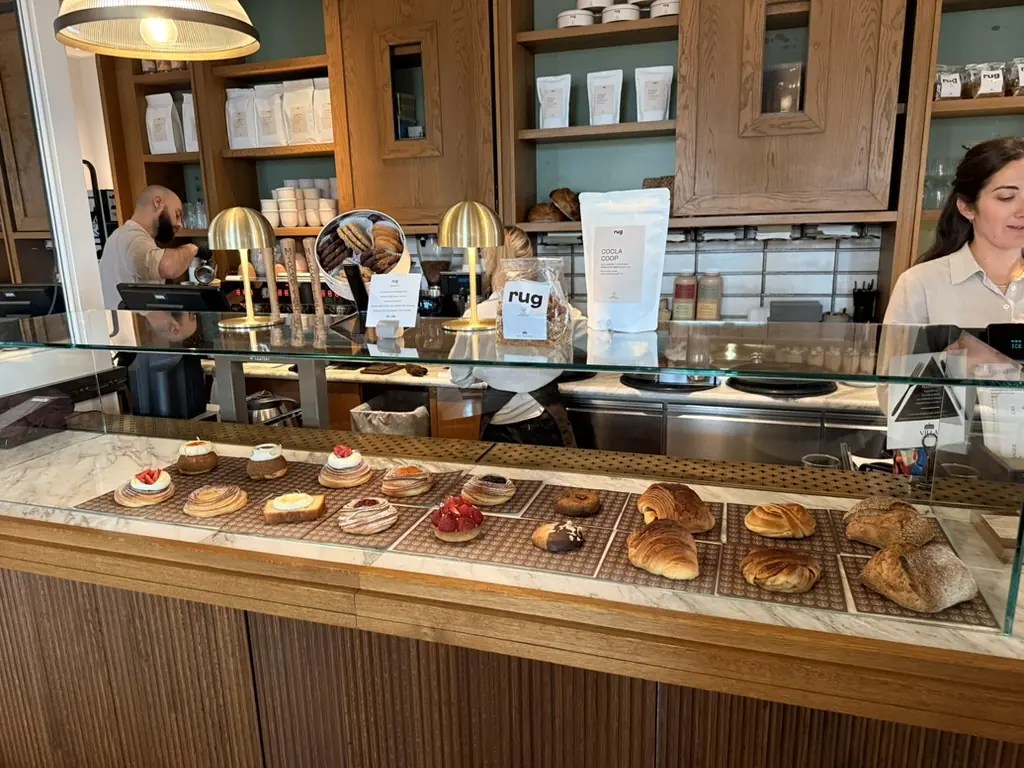
5. RUG Bakery, Near Copenhagen Central Station
Ranking: Number 5 Dough style: Fairly structured Greatest strength: Attractive craftsmanship, thoughtful interior and plenty of space Greatest weakness: Cardamom is too mild
RUG is in Villa Copenhagen on Tietgensgade, beside Copenhagen Central Station. It functions as a bakery, restaurant and bar, with far more seating than small microbakeries.
The interior and whole venue are thoughtfully and attractively designed. It feels like somewhere to settle in rather than make a quick stop at a display. There is plenty of room, making RUG a good option for friends or family.
The baking also looks skilful. The bun is carefully shaped and presented, clearly visible in my photographs.
The texture is good. The dough has more structure than Juno’s or Hart’s and feels less like an ordinary airy tea bun.
The problem is the cardamom.
It is too mild and lacks the large seeds, distinct buttery note and creamy depth that elevate Juno. For my taste, the beautiful execution is somewhat understated in flavour.
RUG is a good choice when already near the Central Station, Tivoli or Vesterbro. In my experience, its larger premises and more stable capacity also mean encountering an empty display less often than at smaller bakeries.
My verdict: Definitely worth visiting for the thoughtful venue, craftsmanship and room for friends or family. The bun looks good and has a pleasant texture, but the cardamom is too restrained for a higher ranking.
6. Sinne Gas Bageri, Østerbro
Ranking: Joint sixth place Dough style: Chewy, substantial and braided Greatest strength: Rich, moist dough with satisfying heft Greatest weakness: Milder cardamom flavour than the leading group
Prices shown were current at the time of my visit and may have changed.
Sinne Gas is on Ryesgade in Østerbro and is a small, trust-based self-service bakery. It is known for sourdough bread, brunsviger and a cardamom braid, its interpretation of the cardamom bun. VisitCopenhagen describes it as a bakery that prioritises quality over large quantities. Read VisitCopenhagen’s review of Sinne Gas.
I had stopped by around three times before, and the cardamom buns were sold out every time. Only after the tasting was effectively finished did I spontaneously stop by again at about 12.15. Fortunately, there were still cardamom buns left this time.
Of course I had to have one. But to be completely sure of my verdict, I bought two.
There were quite a few wasps around the sweet buns. We talked about how this is a challenge many bakeries face when they keep the door open for customers.
My entirely unscientific thought was that if the wasps were so interested, there must be some real sugar and baking worth having. But wasps are certainly not an ingredients label and tell us nothing reliable about E-numbers, ingredients or pesticides.
The bun tastes really good, but the cardamom is milder than at many of the places higher on the list. The dough is a little chewier and has real heft. Fortunately, it is not the classic, overly airy bread-roll dough. This is substantial baking with a fuller mouthfeel.
It is also wonderfully rich and moist — somewhat like Nordisk Brød. Expect to lick your fingers afterwards.
The outside is slightly crisp, and the braided construction is interesting. It is tall and almost muffin-shaped rather than traditionally flat. In that respect it resembles Bodenhoff’s bun, only smaller.
My verdict: A worthy cardamom bun that is absolutely worth a visit. The substantial, rich dough and attractive braid earn points, while the milder cardamom flavour keeps it outside the leading group. Sinne Gas shares sixth place with Andersen Bakery and Bodenhoff.
6. Andersen Bakery, Islands Brygge
Ranking: Joint sixth place Dough style: Relatively dry and traditional Greatest strength: The bakery’s general quality
Andersen Bakery has a location on Islands Brygge, among others, and also a branch in Ørestad.
The bakery’s story combines Danish baking traditions with Japanese precision. Its official history describes how inspiration from Danish baking was taken to Japan and later returned to Copenhagen.
Its cardamom bun was quite decent. It was a little dry for my taste, but still better than Kasada’s.
Andersen Bakery generally has an attractive selection of bread and pastries. It is a good stop on Islands Brygge, even though its cardamom bun does not make my leading group.
My verdict: Decent quality and an interesting bakery. The bun needs a little more moisture and stronger cardamom.
6. Bodenhoff, Herlev
Ranking: Joint sixth place Dough style: Tall and baked in a mould Greatest strength: Price, size and how filling it is Greatest weakness: More vanilla than intense cardamom
I have tasted Bodenhoff’s cardamom bun more than once, and the second tasting changed my earlier assessment.
It is still a good, large bun. It is tall, baked in a mould and more substantial than many trendy café versions. Its price is among the best in the test, especially for its size.
There is remonce in the middle, but the most noticeable sweet flavour reminds me more of vanilla than cardamom.
The outside is relatively dry, and there are not many large cardamom seeds. You therefore do not get the same intense aromatic bursts as at Den Bette, Juno and Nordisk Brød.
Bodenhoff and Nordisk Brød both offer plenty for your money, but their buns are not alike. Bodenhoff’s is tall, mould-baked, bready and more vanilla-led. Nordisk Brød’s is freely shaped, gooey, creamy and strongly flavoured with cardamom.
Bodenhoff wins on size and how filling it is. Nordisk Brød clearly wins on flavour, remonce or cream, cardamom and the overall experience. Between the two, I would choose Nordisk Brød.
Bodenhoff has published a recipe for its cinnamon bun. The dough in that recipe contains yeast, butter, milk, sugar, cardamom, wheat flour and eggs. The remonce contains butter, brown sugar, sugar and cinnamon. That is a positive sign regarding the use of butter, but it is not a complete ingredients declaration for the cardamom bun sold in the shop. See Bodenhoff’s cinnamon bun recipe.
My verdict: A large and reasonably priced pastry. More vanilla and bread than intense cardamom. A good middle-ranking choice, outside the leading group.
7. Bagerdygtigt, Amager
Ranking: Seventh place Dough style: Tall, mould-baked and dense Greatest strength: Substantial texture and an organic profile
The price shown was current at the time of my visit and may have changed.
Bagerdygtigt on Amagerbrogade presents itself as an organic bakery and has several branches in Copenhagen.
The interior is simple, with around ten to twelve seats by my count, perhaps a few more.
The cardamom bun is tall and baked in a mould. It is denser and more substantial than Juno’s and Alice’s, which is a plus for me.
The cardamom flavour, however, is too mild.
I also noticed a slightly unusual buttery, almost faintly cheesy aroma. It reminded me of the smell of pizza dough or a panini with cheese heated in the oven.
That sounds strange, but the bun still tasted good.
My verdict: A solid middle-ranking choice. Good structure and heft, but too little cardamom for the top spots.
8. Svaneke Brød 2300, Amager Strand
Ranking: Eighth place Price on my visit: Around DKK 35–38, as far as I remember Dough style: Substantial and flavourful, but my bun was dry Greatest strength: Attractive shape and characterful dough
This particular bun was dark-baked when I visited; other batches may differ.
Svaneke Brød 2300 is an independent bakery with roots on Bornholm, focusing on bread and pastries near Amager Strand.
The cardamom bun was attractively shaped.
The dough itself had a good, substantial texture. It did not taste strongly of yeast, but I noticed slightly tangy, fermented undertones that reminded me of sourdough.
I do not know whether the cardamom bun itself contains sourdough. The flavour could also come from the flour or the dough’s fermentation.
I would not explain it by suggesting that the bun was baked in the same oven as sourdough bread. Sharing an oven does not normally transfer an actual sourdough flavour to a different dough.
The bun I received had no noticeable remonce. It was also very dry and slightly burnt on the outside.
I may have been unlucky with that particular bun. I would therefore not conclude that every batch is equally dry.
The underlying flavour and dough texture were still good. The lack of filling and the heavy baking simply made it less moist and satisfying than its competitors.
My verdict: Attractively shaped, with good, substantial dough. My bun was too dry, slightly burnt and lacked remonce. Below Espresso House and Nordisk Brød.
9. Hart Bageri
Ranking: Joint ninth place Dough style: A croissant-and-bread-roll hybrid Greatest strength: Size and beautifully made pastries Greatest weakness: Both versions tested tasted too little of cardamom
Hart’s product is called a cardamom croissant. On its website, Hart describes it as smaller pieces of croissant dough tossed in cardamom sugar and baked together.
On my first visit, I could only get a version with an orange flavour. I could not get a plain version with cardamom on its own, so my actual tasting experience did not quite match the simpler product description on the website.
It is large and sweet, with visible cardamom seeds. If you want a large pastry, you get more size here than at many competitors.
To me, the texture is still more bread-roll-like than the name croissant suggests. It feels halfway between a firm bread roll and a laminated pastry.
The orange and citrus flavour was noticeable and, to my taste, had a slightly bitter aftertaste. At the same time, the product did not taste particularly strongly of cardamom.
For me, the citrus note interferes with the pure cardamom flavour.
I later visited Hart again and tried their other option, which they call a cardamom croissant. It smelled slightly of cardamom, but tasted more like an unusual, relatively dry croissant. It was creative and visually interesting, but lacked both the gooey centre and the distinct flavours I look for in this test.
I understand why it might appeal to guests looking for a different kind of croissant. As a candidate for a list of the best cardamom buns, it simply does not work particularly well for me.
My verdict: Hart is creative, and both products look attractive. The orange-flavoured version tasted more of orange than cardamom, while the cardamom croissant was too dry and only lightly spiced. Hart therefore remains in joint ninth place — above Kasada, but clearly outside my leading group.
Only worth considering when you are already nearby
9. Kajakhotellet, Amager Strand
Ranking: Joint ninth place Type: Café and convenience pastries Greatest strength: The location Greatest weakness: Uneven heating and coffee I personally dislike
Kajakhotellet is not a bakery. It is a watersports venue with kayaking, SUP, lessons, a shop, café and waterfront terrace.
Over time, I have seen various buns there, including cardamom, vanilla and cinnamon, as well as croissants and other snacks. I do not know whether the cardamom bun is a permanent part of the selection.
My impression is that the pastries arrive frozen or as bake-off products and are finished on site. I have not seen the supplier’s packaging or an ingredients declaration, so this is my observation rather than a documented production method.
When the bun is allowed to thaw slowly during the day rather than being heated intensely, it can have quite a pleasant texture. When it spends too long in the oven, it becomes dark, dry and almost burnt.
Their croissants are also quite decent.
I would not travel to Kajakhotellet just for the food. If you are already at the beach for a swim, kayaking or paddleboarding, a bun makes a perfectly good snack with coffee.
The coffee, however, is a clear downside for me. I have not liked either the filter coffee or the espresso I have had there. Friends I have brought along have had the same experience.
That is our personal assessment of the coffee we were served, not a universal verdict on their coffee supplier.
My verdict: A decent snack after time on the water. Not a destination for either cardamom buns or coffee.
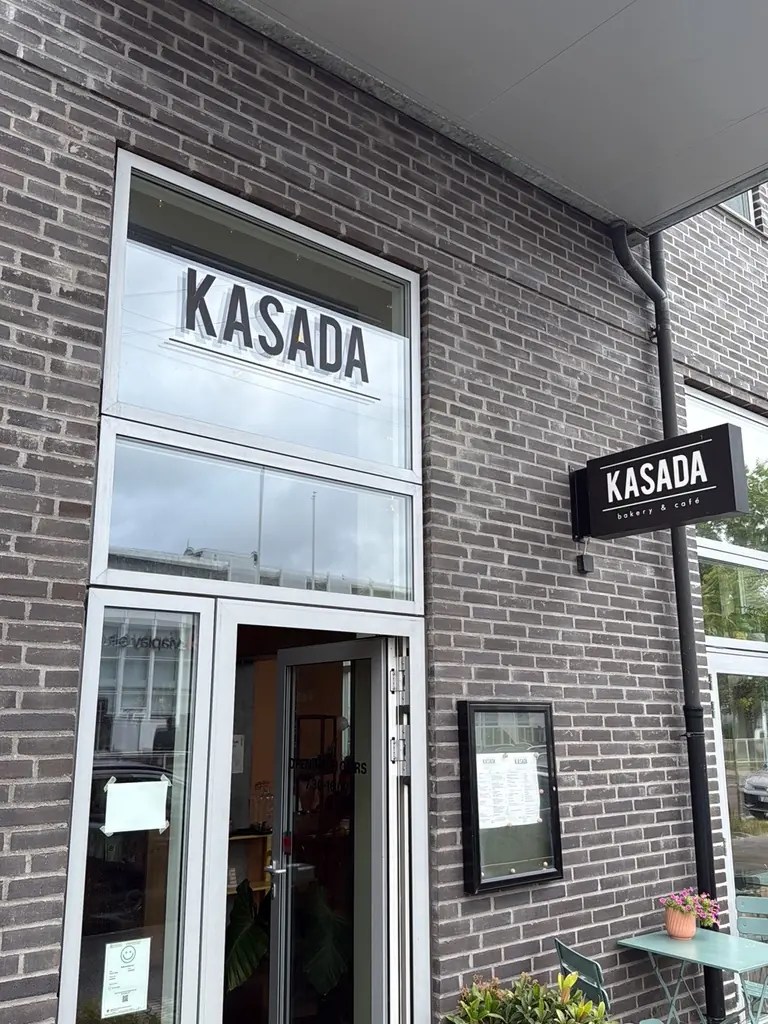
10. Kasada, Amager
Ranking: Tenth place Dough style: Soft and bread-roll-like Biggest problem: Repeated visits when sold out, and a mild flavour
The price shown was current at the time of my visit and may have changed.
Kasada is a modern bakery and café on Strandlodsvej.
I visited Kasada several times to try its cardamom bun. It was sold out three times, even at around 11 am.
When I finally managed to taste it, the experience was disappointing.
It was soft and mild, with too little distinctive cardamom flavour. After tasting Den Bette, Juno and Nordisk Brød, Kasada’s version felt unremarkable.
Other people may prefer this soft, restrained style. For me, the flavour did not reward the many unsuccessful trips.
That does not mean Kasada is generally a bad bakery. This assessment concerns only the cardamom bun and its availability.
My verdict: Not worth making a special trip for.
11. Conditori La Glace, Central Copenhagen
Ranking: Eleventh place Dough style: Traditional sweet café pastry Greatest strength: The historic pâtisserie experience Greatest weakness: Dry, very mild and almost without cardamom flavour
La Glace is one of Copenhagen’s best-known pâtisseries and remains an obvious place to visit for famous classics such as Sportskagen and Othellolagkagen.
Unfortunately, my experience of its cardamom bun was quite different. It was a little dry, tasted mostly sweet and had very little cardamom flavour. The large pieces of sugar on top felt out of place and did not improve the overall result.
In my assessment, Kasada’s bun was still clearly better. La Glace therefore takes eleventh place: a wonderful destination for famous cakes, but not somewhere I would recommend choosing the cardamom bun.
My verdict: Go for the pâtisserie’s classics rather than its cardamom bun.
The Bottom Group: Included, Not Recommended
The bottom group begins at twelfth place, with the industrial-style buns from supermarkets and chains. Lidl tasted best in this group, but that still does not make it a recommendation.
My criticism of the bottom group concerns the overall experience: flavour, my impression of the ingredients, the degree of industrial processing and value for money. An E-number is not automatically dangerous, and I only link specific ingredient claims to a declaration I have actually been able to check.
12. Lidl
In my assessment, Lidl tastes best among the inexpensive, industrially produced buns at the bottom. That does not make it a recommendation. Its documented long ingredients list is far removed from the simple, butter-based craft baking I am looking for.
My verdict: Twelfth place. The best flavour in the bottom group when absolutely fresh, but still not a cardamom bun I recommend.
SuperBrugsen’s bakery in Gilleleje comes just below Lidl. I find its bun industrial in character and far removed from the artisan favourites, but I do not publish specific claims about additives without the current declaration for this exact product.
My verdict: Thirteenth place. Not a recommendation.
14. Kvickly, Føtex and Lagkagehuset
Kvickly, Føtex and Lagkagehuset share last place. To me, they do not offer a tasting experience worth the money, and should not be read as recommendations.
That is my personal verdict on the products I tasted. Where a complete, current ingredients declaration is unavailable, I do not describe specific E-numbers or additives as documented facts.
My verdict: Joint fourteenth place, at the very bottom of the test.
Places Not Yet Tasted or Rated
The following places have either not been tasted, have not been reliably confirmed as regular cardamom destinations, or were excluded from my personal tasting because of almonds.
Københavns Bageri is on Flaskehalsen in Carlsberg Byen. It has an open production area and is highlighted for modern interpretations of traditional pastries.
Status: One of the main candidates for my next tasting.
Farumhus has described its cardamom bun as containing soft dough, eggs, wheat flour, borgmestermasse filling, cardamom and sugar. The product information also lists milk and almonds as allergens.
The full composition of the borgmestermasse filling is not stated. I therefore do not know which fats, syrups or other ingredients it contains.
I cannot tolerate almonds, so the product is not an obvious candidate for my own taste test.
An official ingredients overview from June 2026 lists wheat flour with ascorbic acid, mixing margarine, cane sugar, eggs, yeast, malt, salt, unsalted butter, cardamom and sunflower oil, among other ingredients.
It is therefore organic, but not baked exclusively with butter.
Status: Not tasted. The ingredients profile does not quite match my ideal of a simple, butter-based recipe.
Lagkagehuset still sells a cardamom bun, describing it as a soft bun with cardamom remonce, sugar and cardamom.
I tasted it as part of the test, but have not found a complete, current ingredients declaration for this specific product.
There has been public debate about long ingredients lists in other products from the chain. However, an ingredients list for a fastelavnsbolle does not document the composition of the cardamom bun.
I will therefore not transfer criticism from one product to another without evidence.
Ranking: Joint fourteenth place. The full ingredients list is unknown, and the bun is not a recommendation.
Wild is a small microbakery with limited opening days and the option to pre-order. I have not confirmed whether a traditional cardamom bun is a regular part of its selection.
Status: A relevant candidate in North Zealand, but the selection needs to be confirmed.
Bisgaard has branches in Hillerød and Østerbro, among other locations. I have not found a complete, current ingredients declaration or reliable confirmation that the cardamom bun is a permanent product.
I have not seen cardamom buns at Gilleleje Havns Bageri, so I have not included it in the ranking.
Its rosenbrød pastries are good, and at weekends it has, in my opinion, made some of the best brunsviger in the area.
A good brunsviger should not have dry sugar crystals sitting on top. The brown sugar and butter should be properly melted together to create a moist topping.
Status: Not part of the cardamom test, but relevant to a broader guide to pastries in Gilleleje.
The ingredients test: What is in the cardamom buns?
Flavour is not my only criterion.
I also want to know whether a product stays close to a traditional recipe of flour, butter, milk, eggs, yeast, sugar, salt and cardamom, or whether it combines several vegetable fats, syrups, flavourings, stabilisers and emulsifiers.
An E-number does not automatically mean something is dangerous
E-numbers are used for many different types of approved food additives.
E300 is ascorbic acid, or vitamin C. E330 is citric acid. Other E-numbers cover substances including pectin, raising agents, emulsifiers and preservatives.
My criticism is therefore not that every E-number is toxic.
Instead, I consider:
How simple the product’s composition is.
Whether butter has been replaced with cheaper fats.
Whether palm, rapeseed or sunflower oil is used.
Whether the product contains several types of syrup and sugar.
Whether flavour and texture depend on flavourings, stabilisers and emulsifiers.
How transparent the producer is.
Føtex: A photograph is not an ingredients declaration
The price shown was current at the time of my visit and may have changed.
I photographed Føtex’s cardamom bun in the display. The sign showed DKK 19 when I visited, but the price may have changed.
The photograph documents neither the full ingredients list nor the production method. I therefore do not use it as evidence of specific additives, fats or flavourings.
Ranking: Joint fourteenth place. To my taste, it is among the worst in the test and not worth the money, but specific ingredient claims must await a verifiable ingredients declaration.
What do we know so far?
Place
Documentation
Provisional assessment
Den Bette
No complete public ingredients declaration found
Unknown, which is not the same as bad
Juno
No complete public ingredients declaration found
Unknown
Nordisk Brød
No complete public ingredients declaration found
Unknown
Espresso House
Official description mentions wheat, sourdough, butter and cardamom
Positive, but the list is incomplete
Bodenhoff
Published cinnamon bun recipe with butter, milk and eggs
Promising, but not documentation for the cardamom bun
Farumhus
Partial product description; composition of the borgmestermasse filling unknown
Too many unknowns
Emmerys
Published ingredients list with margarine, butter and sunflower oil
Transparent, but not my ideal ingredients profile
Lagkagehuset
Product description, but no complete list found
Unknown
Lidl
Detailed official ingredients list
Industrial formulation
SuperBrugsen Bager, Gilleleje
No verified full declaration found
Personally ranked thirteenth; ingredients not documented
Kvickly
No verified full declaration found
Personally ranked joint fourteenth; ingredients not documented
Føtex
Photograph and price from the visit, but no verified full declaration
Personally ranked joint fourteenth; ingredients not documented
“Unknown” does not mean that a product is bad or full of additives. It means that I will not guess.
Bodenhoff
Bodenhoff’s official cinnamon bun recipe uses butter, milk, eggs, flour, sugar, yeast and cardamom in the dough. That is a positive sign, but it is still not a full ingredients declaration for the cardamom bun.
Farumhus
Farumhus lists soft dough, eggs, wheat flour, borgmestermasse filling, cardamom and sugar, plus the allergens milk and almonds.
The full composition of the borgmestermasse filling is not stated. I therefore cannot establish whether it contains margarine, vegetable oils, glucose syrup, maltodextrin or other ingredients.
Espresso House
Espresso House mentions wheat, sourdough, butter and cardamom. That is interesting because butter is explicitly included in the product description.
However, the list is incomplete. The product therefore cannot be declared free of other additives on the basis of the public description alone.
Emmerys
Emmerys’ official ingredients overview from June 2026 lists wheat flour with ascorbic acid, mixing margarine, cane sugar, eggs, baker’s yeast, malt blend, salt, unsalted butter, cardamom and sunflower oil.
The product is organic, but it is not an all-butter dough. Mixing margarine appears before butter on the ingredients list, which normally means there is more margarine than butter by weight.
Lagkagehuset describes its cardamom bun as a soft bun with cardamom remonce, sugar and cardamom. I have not found a complete, current ingredients declaration.
It is therefore not fair to put it in the same documented ingredients category as Lidl. Its joint last place is my taste assessment, not a documented ingredients comparison.
Lidl: Best flavour in the bottom group, but not a recommendation
Lidl’s cardamom bun can taste surprisingly decent when fresh and, in my assessment, has the best flavour in the bottom group.
If it has been sitting around, it becomes dry. Even when completely fresh, it is not a recommendation or an alternative to a good artisan bakery.
The official Danish ingredients overview from August 2026 lists the following, among other ingredients:
Wheat flour.
Sugar.
Palm oil.
Rapeseed oil.
Coconut oil.
Skimmed milk.
Eggs.
Yeast.
Modified potato starch.
Whey powder.
Dextrose.
Wheat gluten.
0.3 per cent cardamom.
Stabilisers.
Raising agents.
Emulsifiers.
Maltodextrin.
Citrus fibres.
Flavourings.
Glucose syrup.
Colourings.
Vanilla.
Enzymes.
Milk protein.
The product is listed as containing 369 kcal and 25.7 grams of sugars per 100 grams. That declaration does not list a conventional preservative from the E200 series. See Lidl’s official bake-off overview from August 2026.
Lidl deserves credit for publishing a detailed list. That transparency makes it possible to make an informed choice.
The formulation is simply far removed from my ideal of traditional, butter-based craft baking.
My verdict: Twelfth place. The best-tasting of the inexpensive industrial buns I have tried, but still not something I recommend.
Is a Cardamom Bun Healthy?
No, not in the usual nutritional sense.
Cardamom is a spice with interesting plant compounds, but a cardamom bun consists mainly of flour, sugar and fat. It should be regarded as a dessert or a treat with coffee, not a health food.
Flour and sugar normally cause blood glucose and insulin to rise after a meal. The size of the response varies from person to person and depends on factors including portion size, the rest of the meal, activity and individual metabolic health.
A single cardamom bun does not cause insulin resistance. It is the overall dietary pattern over time that matters.
Personally, I find it an odd Danish tradition that we often start the day with some of the most sugary food we eat.
I prefer to begin with a meal based on whole foods and protein, such as eggs, and perhaps eat something sweet afterwards.
Also, do not follow my example and go on a complete cardamom bun spree.
I have a tendency to go through phases with particular foods. In spring it was Fazer Mint chocolate, until I had eaten around three to four kilos over six months. Fortunately, I eventually got tired of it.
Now it is cardamom buns.
At Det Høje Brød, they also told me there is plenty of both butter and sugar in their pastries. That fits with my enjoyment of the flavour, but even truly good baking is obviously not health food.
After several months of taste testing, I have also gained weight. It is probably time for me to cut back on the buns and get my weight back on track.
I find that after repeated visits, I start wanting another at roughly the same time the next day. That is my personal experience, not a claim that one bun automatically triggers the same response in everyone.
It also does not fit particularly well with the carnivore-inspired diet I otherwise write and talk about on MarkBarner.com.
Hopefully, I will have got over my cardamom bun obsession by the time this article is finished.
I would therefore recommend enjoying a good cardamom bun occasionally, ideally with coffee and preferably after a more nourishing meal.
Do not turn the taste test into a personal research project involving several buns a day. That is more likely to end in nausea than greater gastronomic insight.
That said, a good cardamom bun with coffee can still brighten a day.
Recipe for intense, substantial and gooey cardamom buns
If the bakery is closed, it is a public holiday or the cardamom buns are sold out yet again, the surest solution is to bake your own.
This recipe aims to combine:
Den Bette’s heft.
Juno’s intense cardamom flavour.
The large cardamom seeds found at Juno, Den Bette and Nordisk Brød.
A moist remonce filling.
A substantial dough without excessive bread-roll airiness.
No orange.
No almonds.
Sweetness that supports the cardamom without overpowering it.
Important: This is my developed ideal recipe, put together from the taste test and classic bun-shaping techniques. It should be test-baked and adjusted for your particular oven before the times and temperatures are treated as final.
Makes 12 large cardamom buns
Active preparation time: About 40 minutes Rising and chilling: 3–12 hours Baking time: About 14–18 minutes
The cardamom
Use about 17–19 grams of cardamom seeds in total.
Buy green cardamom pods, open them and remove the seeds. The green husks should not go into the pastries.
Divide the seeds as follows:
5–6 grams of finely or moderately crushed seeds for the dough.
8–9 grams of coarsely crushed seeds, with a few left whole, for the remonce.
3–4 grams of coarsely crushed seeds, with a few left whole, for the topping.
Leave only a small proportion of the seeds completely whole. Too many whole seeds can be hard and overwhelmingly intense.
Dough
500 g strong wheat flour.
250 g whole milk.
15 g fresh yeast for a slow rise, or 25 g for baking the same day.
1 large egg.
70 g sugar.
9 g fine salt.
5–6 g freshly crushed cardamom seeds.
110 g softened butter.
Cardamom remonce
150 g softened butter.
120 g soft brown sugar.
30 g cane sugar.
8–9 g cardamom seeds, coarsely crushed with a few left whole.
10–15 g wheat flour.
1 tsp vanilla paste, optional.
A small pinch of salt.
The flour helps keep the remonce inside the bun rather than letting it run onto the baking tray.
Sugar syrup
50 g water.
50 g sugar.
Topping
3–4 g coarsely crushed cardamom seeds, with a few left whole.
1–2 tbsp cane sugar, optional.
The sugar on top is a matter of taste. Cardamom should be the main flavour, with sugar supporting it.
Method
1. Prepare the cardamom
Open the green cardamom pods and remove the seeds.
Crush some finely in a mortar. Crush another portion coarsely and leave a few seeds whole.
Divide them between the dough, remonce and topping.
2. Mix the dough
Dissolve the yeast in the milk.
Add the egg, sugar, cardamom and most of the flour.
Knead at low speed for about five minutes. Add the salt.
3. Incorporate the butter
Add the softened butter a little at a time.
Continue kneading for eight to twelve minutes, until the dough is smooth, elastic and comes away from most of the bowl.
The dough should be soft and slightly sticky. Avoid adding large amounts of extra flour. Too much flour produces a dry centre.
4. First rise
Cover the dough and let it rise for 45–60 minutes.
Then refrigerate for at least two hours, preferably eight to twelve hours.
Cold dough is easier to roll and produces a more substantial structure.
For same-day baking, the dough can rise longer at room temperature and then chill for 30–45 minutes before rolling.
5. Make the remonce
Mix the butter, brown sugar, cane sugar, cardamom, flour, salt and optional vanilla.
Stir only until combined. If whipped until very airy, the filling is more likely to run out during baking.
6. Roll out the dough
Roll the cold dough into a rectangle measuring about 50 by 40 centimetres.
Spread the remonce evenly, right to the edges.
7. Fold the dough
Fold one third towards the middle.
Then fold the other third over it, creating three layers.
Gently roll it a little longer without squeezing out the remonce.
If the dough has softened, refrigerate for 15 minutes.
8. Shape the buns
Cut the dough into 12 wide strips.
Twist each strip several times. Wrap it around two fingers and tuck the end underneath the bun.
Shape them fairly tightly. This gives more heft and less of an airy bread-roll texture.
9. Final proof
Place the buns on baking paper, leaving plenty of space between them.
Let them proof for 60–90 minutes.
They should grow noticeably, but need not double in size. The aim is a soft but still substantial bun.
Optionally brush with beaten egg for a more golden surface.
10. Bake
Bake at:
200–205°C in a conventional oven.
185–190°C in a fan oven.
Bake for about 14–18 minutes. Start checking after 13–14 minutes.
They should be distinctly golden and slightly crisp outside, but still moist in the centre.
11. Sugar syrup and cardamom
Briefly boil the water and sugar together until the sugar dissolves.
Brush the hot buns with a thin layer of sugar syrup.
Immediately sprinkle with the mixture of coarsely crushed and a few whole cardamom seeds.
Optionally sprinkle with a little extra cane sugar if they are not sweet enough.
Let them rest for at least ten minutes. They taste good warm, but the structure becomes more cohesive when the remonce and dough have time to set.
Storage
The buns are best on the day they are baked.
They can be frozen once cool. Let them thaw, then reheat briefly and gently.
Excessive reheating dries them out, creating the same problem I have encountered with overheated café pastries.
Three Practical Cardamom Routes
The Amager route
Alice.
Den Bette.
Nordisk Brød.
Bagerdygtigt.
Svaneke Brød 2300.
Kajakhotellet, if you want to finish by the water.
Den Bette and Nordisk Brød are the key stops. You do not necessarily have to eat a whole bun at every place. Share them or take them home.
Central Copenhagen, Østerbro and Nordhavn
RUG near Copenhagen Central Station.
Juno in Østerbro.
Sinne Gas on Ryesgade.
Andersen & Maillard in Nordhavn, if the day’s selection has been confirmed.
Juno is the most reliable destination on this route because it bakes throughout the day.
North Zealand
Det Høje Brød in Gilleleje.
Bagt in Gilleleje, if you can tolerate almonds and want its interpretation.
Gilleleje Havns Bageri for other traditional pastries.
Wild Mikrobageri in Hornbæk, once the selection and opening hours have been confirmed.
Tisvilde Brød on a longer trip.
Det Høje Brød is the main destination.
When the Taste Test Makes the Bakers Happy Too
One of the loveliest parts of this taste test has been telling some of the bakeries where they finished on the list.
I told Den Bette they were number one. They were pleased, although their reaction was more restrained than the one I later experienced at Det Høje Brød. Even small microbakeries are busy, and a good review need not prompt a scene of celebration. The credit for first place belongs to them. I have simply judged their pastries according to my own taste buds.
At Det Høje Brød, the delight was unmistakable. When I told the owner and staff about their joint third place, they immediately started giving one another credit for the work. They discussed who had made the dough and who had handled the different parts of production.
It was lovely to experience. After several months of tastings and comparisons, it made me happy to see that the work also mattered to the people behind the baking.
I hope the article brings them more customers — both so that more people can enjoy their cardamom buns and so the bakers feel their work is appreciated.
I also often buy sourdough rolls at Det Høje Brød because my partner likes them. It is already somewhere we return to.
I hope they maintain the same quality and hold their excellent position — or perhaps climb even higher. The list is updated when I try new places or revisit previous participants. New competitors and tasting experiences may therefore affect the ranking.
I have not yet had the opportunity to tell Juno about its second place. That conversation is still to come.
The bakeries’ reactions are lovely to experience, but they do not affect the rankings, which remain based on my personal tasting experiences.
My final verdict
The best cardamom bun I have tasted is still:
Den Bette on Amager
It has the best overall combination of:
Strong cardamom.
Large cardamom seeds.
Dense, substantial dough.
A lightly crisp surface.
A moist centre.
Good size.
How filling it is.
Value for its size.
Juno is second because of its continuous baking, warm serving and intense cardamom. The dough is simply too airy for my personal first place.
Det Høje Brød and Nordisk Brød share third place. Det Høje Brød is my clear choice in North Zealand.
My return visit to Nordisk Brød significantly strengthened its position. The bun is not neat and controlled like modern Nordic versions. It is irregular, sweet, crisp around the edges and extremely gooey in the middle. The combination of large cardamom seeds and a custard-like filling makes it one of the test’s greatest tasting experiences. Den Bette remains my overall winner, but Nordisk Brød is now my clear choice when I want the most indulgent, old-fashioned bakery swirl.
Espresso House showed that a large coffee chain can deliver a cardamom bun that beats several independent bakeries. It shares fourth place with Alice, Meyers and Jato.
Jato deserves fourth place for its beautiful craftsmanship and delicious marzipan cream. The cardamom is milder and lacks the large seeds, but the combination works well and is absolutely worth a visit.
RUG is fifth. Sinne Gas, Andersen Bakery and Bodenhoff share sixth place, Bagerdygtigt is seventh and Svaneke Brød is eighth.
Sinne Gas finally joined the test after around three sold-out visits. Its braided bun has substantial, rich and slightly chewy dough, with milder cardamom than the leading group — but it is absolutely worth a visit.
Bodenhoff offers plenty of pastry for the money, but tastes more of vanilla than strong cardamom.
Svaneke Brød had attractive, substantial dough, but my bun was too dry, slightly burnt and lacked remonce.
Hart and Kajakhotellet share ninth place. Hart is creative, but its orange-flavoured version and dry cardamom croissant fit poorly into a ranking of traditional cardamom buns. Kajakhotellet works best as a snack after time on the water.
Kasada is tenth. It was a big disappointment because several unsuccessful visits were eventually rewarded with a mild, unremarkable cardamom bun — but it was still clearly better than La Glace’s version.
Andersen & Maillard and Lille Bakery are still absent from the ranking because their cardamom products were sold out when I tried.
Conditori La Glace is eleventh. I still recommend visiting for its famous cakes, but its dry, very mild cardamom bun fell short in this particular test.
Lidl is twelfth and tastes best among the inexpensive industrial buns I have tried. That still does not make it a recommendation. SuperBrugsen Bakery in Gilleleje is thirteenth, while Kvickly, Føtex and Lagkagehuset share last place at number fourteen.
For me, the bottom group is so far removed from artisan baking that it does not offer an experience worth the money. That is my personal taste verdict. Specific information about E-numbers and additives applies only to products whose current ingredients declarations I have been able to check.
Frequently Asked Questions
Where can you get the best cardamom bun in Copenhagen?
My clear favourite is Den Bette on Kirkegårdsvej on Amager. It has dense dough, strong cardamom, large seeds, a lightly crisp surface and a moist centre.
Why is Conditori La Glace ranked eleventh?
My cardamom bun from La Glace was a little dry, mostly sweet and tasted very little of cardamom. The pâtisserie is still worth visiting for classics such as Sportskagen and Othellolagkagen, but I do not recommend its cardamom bun.
Where can you get the gooiest cardamom bun in Copenhagen?
My choice is Nordisk Brød on Holmbladsgade. Its bun is freely shaped, very sweet and filled with a custard-like or remonce-like mixture. It has soft bread, crisp edges and large cardamom seeds. Den Bette remains my best overall cardamom bun, but Nordisk Brød is the most indulgent.
Which cardamom bun most resembles a traditional Danish cinnamon swirl?
Nordisk Brød. Its construction and flavour are closer to a traditional, freely shaped bakery swirl with cardamom and creamy filling than to a modern Swedish cardamom bun.
Is Juno worth queuing for?
Yes, especially if you love soft Swedish cardamom buns and intense cardamom. Juno bakes throughout the day, so its buns are often warm and fresh. The dough is much softer than Den Bette’s.
Where can you get the best cardamom bun in North Zealand?
My choice is Det Høje Brød near Gilleleje Station. Arrive early or reserve one, because the batch often sells out.
Which cardamom bun offers the best value?
Nordisk Brød offers a strong combination of price, size, remonce and large cardamom seeds. Bodenhoff also offers plenty of pastry and a filling portion for the price.
Which chain has the best cardamom bun?
Espresso House was the most positive chain surprise in the test. Its bun was served perfectly warm, with a good texture and a pleasantly creamy filling.
Why are cardamom buns so often sold out?
Small bakeries have limited capacity and must also avoid food waste. In my experience, however, cardamom buns often sell out before cinnamon buns. Call or message ahead and ask for some to be reserved. Den Bette’s use of Too Good To Go bags also shows how any surplus can be sold more cheaply the next day instead of being thrown away.
What is the difference between a kardemommebolle and a kardemommesnurre?
The names are often used interchangeably. “Snurre” normally refers to the twisted shape, while “bolle” is often associated with a softer Swedish dough. In practice, products range from airy buns to dense, Danish-pastry-like twists.
Should whole cardamom pods go into the recipe?
No. Open the green pods, remove the seeds and discard the husks. Use a mixture of finely crushed, coarsely crushed and a few whole seeds.
Is a Cardamom Bun Healthy?
No. It is a sweet pastry based on flour, sugar and fat. The cardamom does not make it a health food. Enjoy it as an occasional dessert or treat with coffee.
Is your favourite bakery missing?
Do you think a bakery is missing from the list?
Do you know a cardamom bun that deserves to knock Den Bette off first place?
Leave its name in the comments below. It could be the next place I visit.
If you work at one of the bakeries, you are also welcome to explain why cardamom buns so often sell out before cinnamon buns.
I would sincerely like to understand it.
Sources and official product pages
The personal taste assessments in this article are my own. The following links were used for addresses, product descriptions, ingredients or practical information: